The CMS this blog runs on ships with every WebEdify site
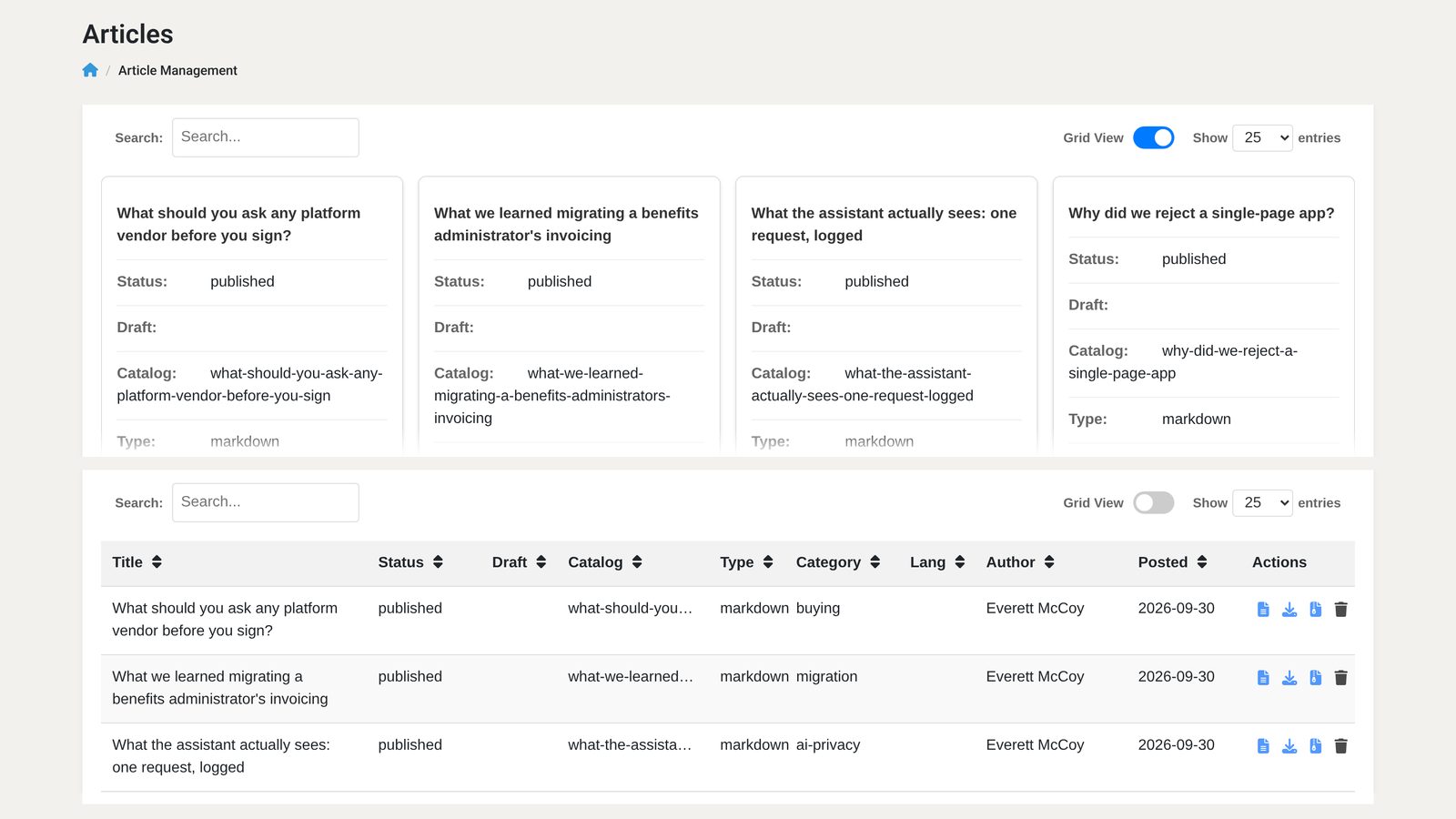
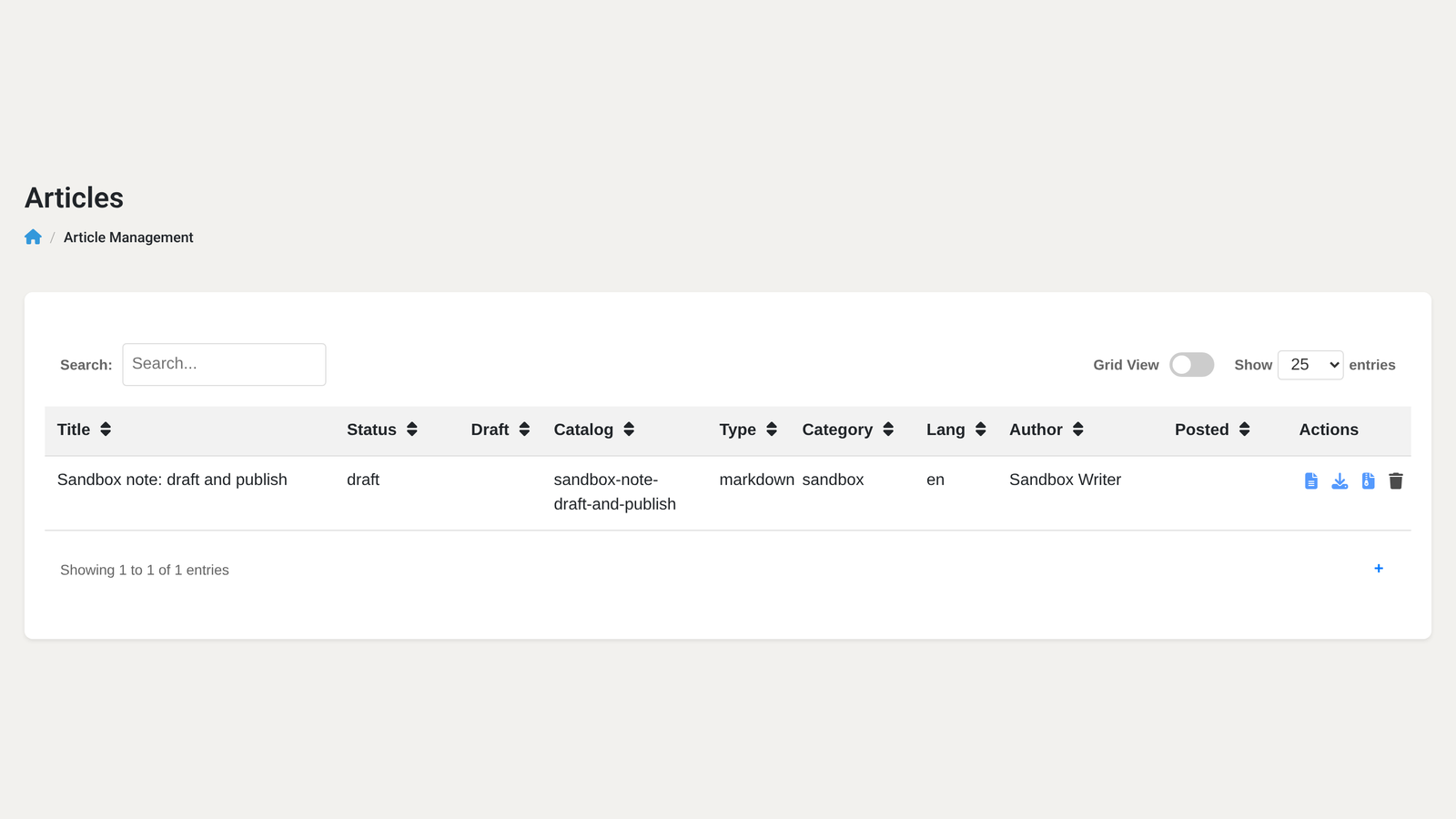
WebEdify's shipped Starter CMS brings articles, media, categories, and publish workflow into the same application — not a separate product with its own login.
Everett McCoy · Oct 2, 2026
How it works, what is in the box, and how to evaluate it.
WebEdify's shipped Starter CMS brings articles, media, categories, and publish workflow into the same application — not a separate product with its own login.
Everett McCoy · Oct 2, 2026
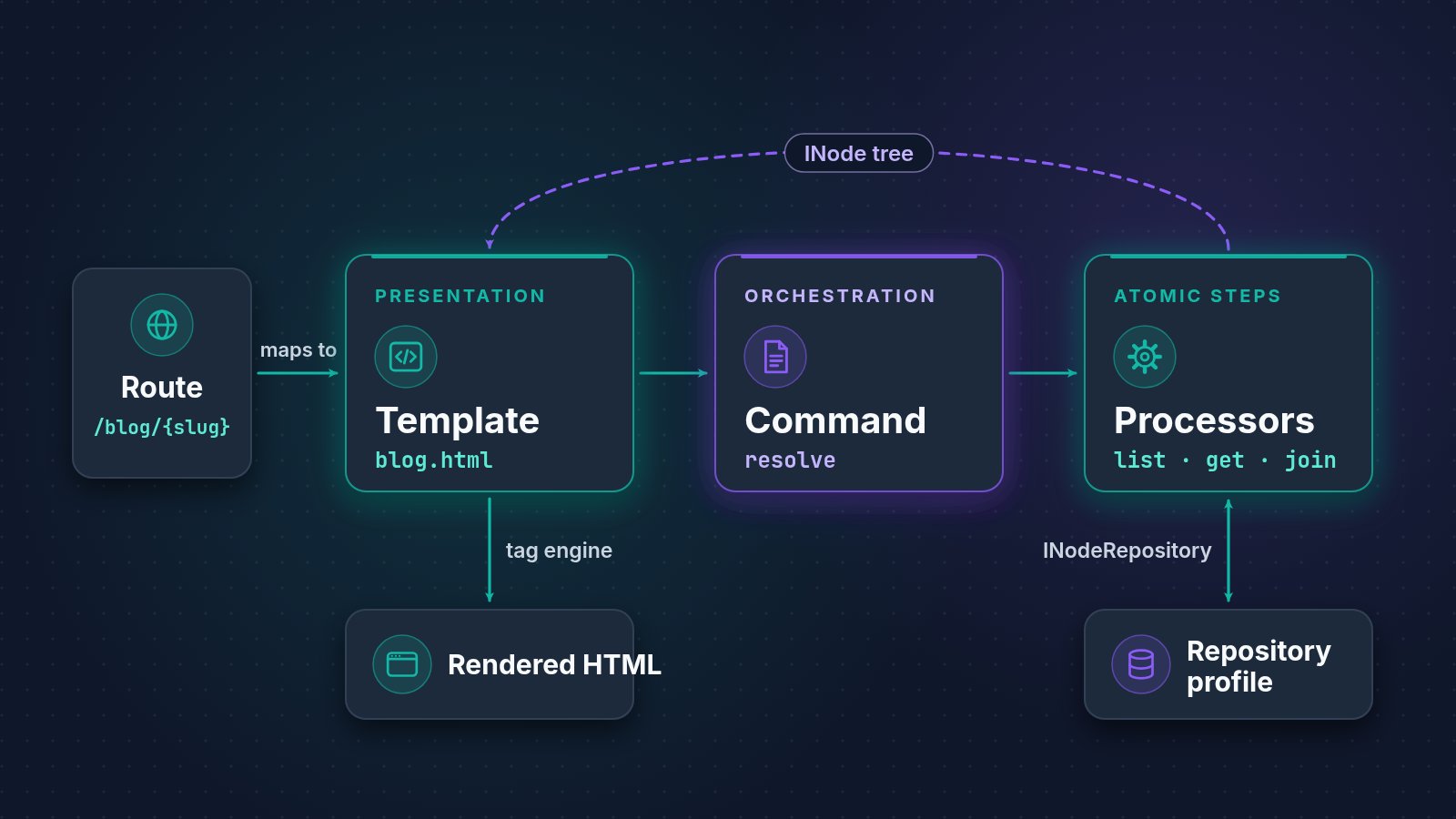
WebEdify collapses the classic MVC stack into templates, markdown commands, and processors — so most features never need a Controller, Service, and Repository trio.
Everett McCoy · Oct 2, 2026
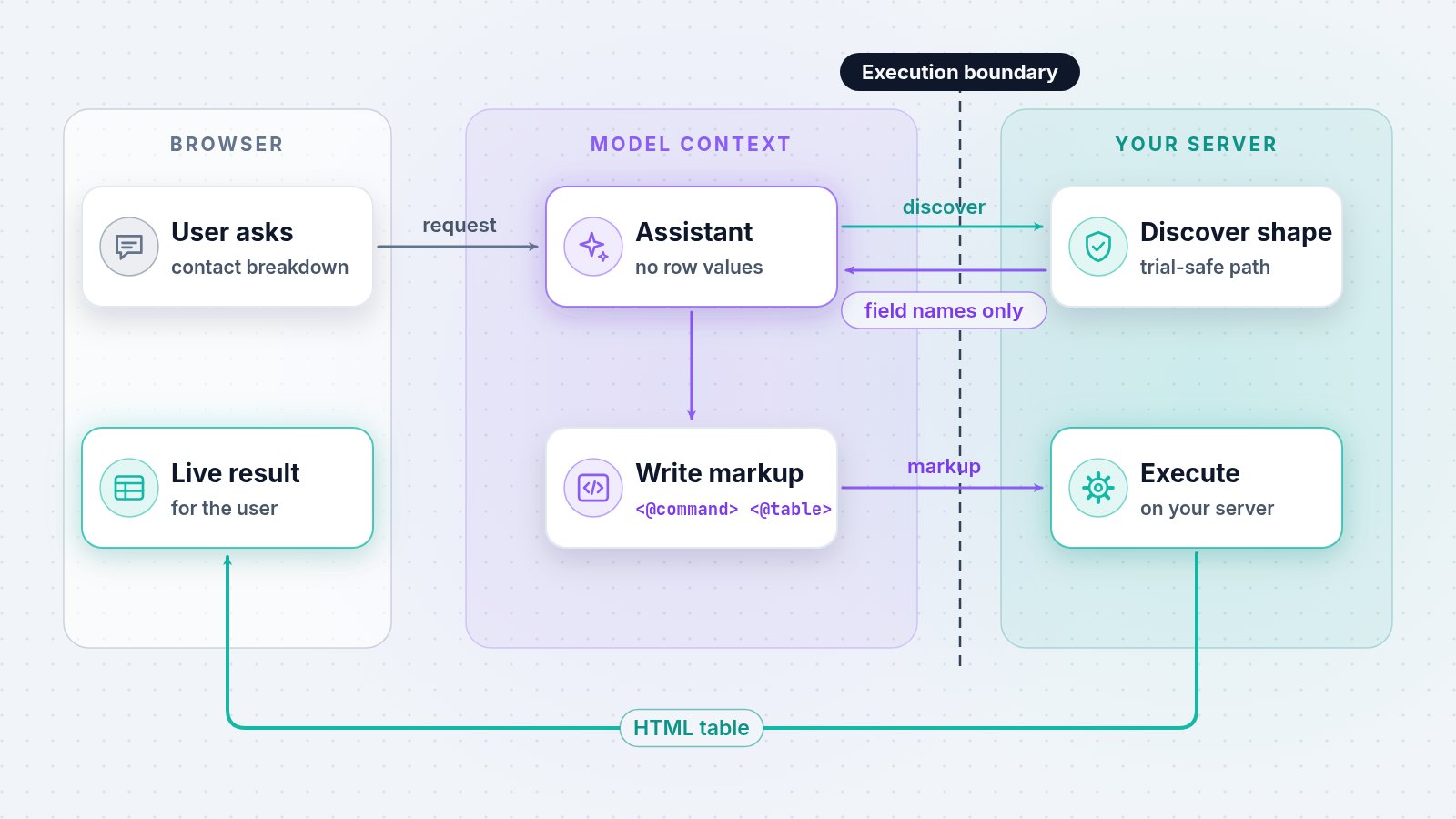
A model can build a useful screen from field names and relationships alone; authorized users receive the rendered result after WebEdify executes the markup on the server.
Everett McCoy · Oct 2, 2026
A WebEdify screen is a template and a command file — so you can ship new pages beside legacy systems, migrate data in scoped batches, and promote changes without a big-bang rewrite.
Everett McCoy · Oct 2, 2026
WebEdify publishes monthly ranges because buyers deserve the order of magnitude before a sales call — and because a dedicated environment is scoped work with clear drivers, not a hidden SKU.
Everett McCoy · Oct 2, 2026
WebEdify's @table tag delivers sort, search, pagination, filters, and CSV export from declarative markup — no React, npm, or build step required.
Everett McCoy · Oct 2, 2026
WebEdify provides a complete .NET application platform — commands, tags, Starter CMS, multi-tenant data, billing, and AI capabilities registered to match the application.
Everett McCoy · Oct 2, 2026

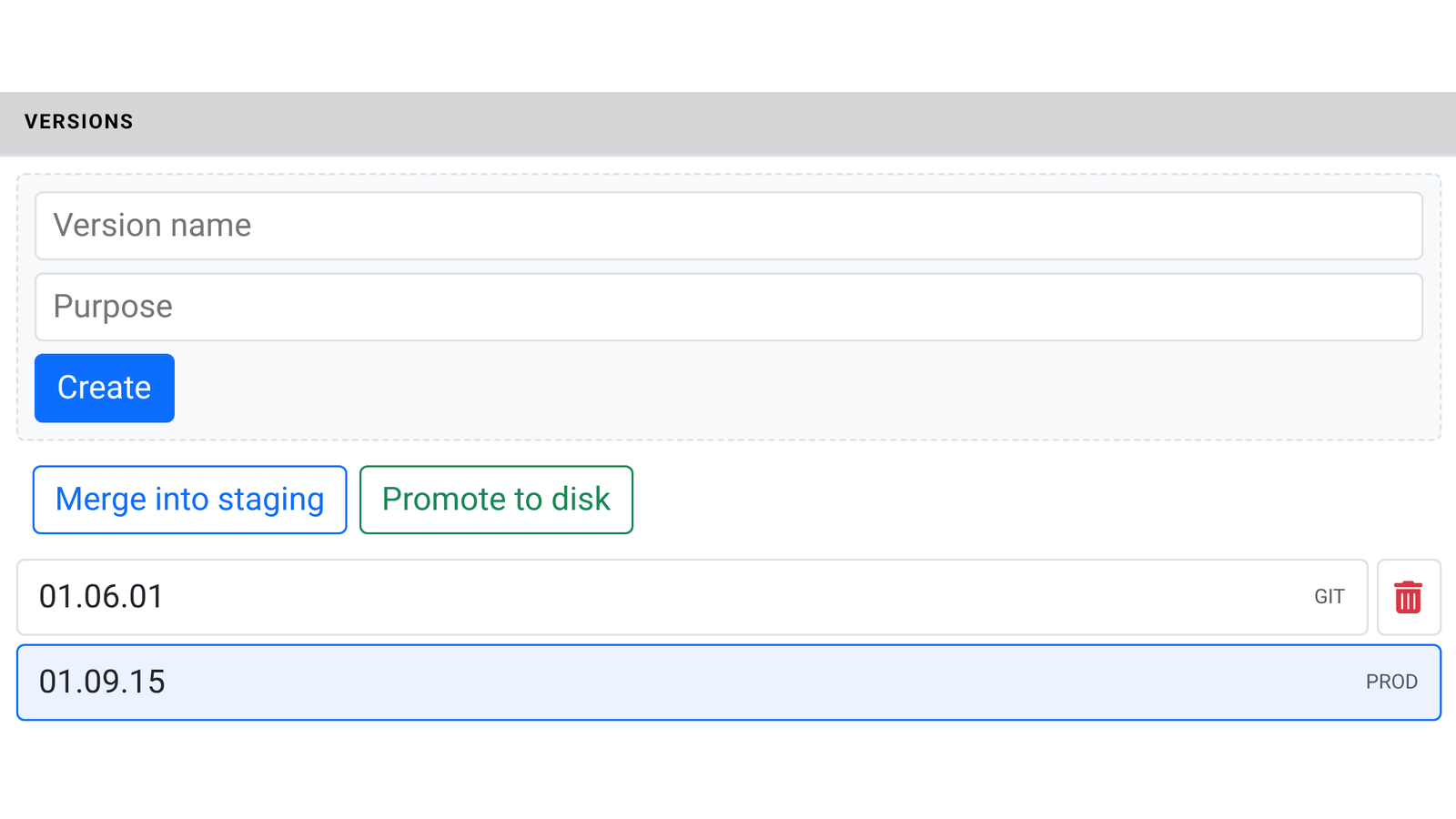
Two developers can preview different changes against one WebEdify application while production remains on the current version until the team promotes approved work.
Everett McCoy · Oct 2, 2026

WebEdify keeps business applications readable from route to rendered page, while its embedded client adds the interactivity ordinary forms, tables, charts, and dialogs need.
Everett McCoy · Oct 2, 2026
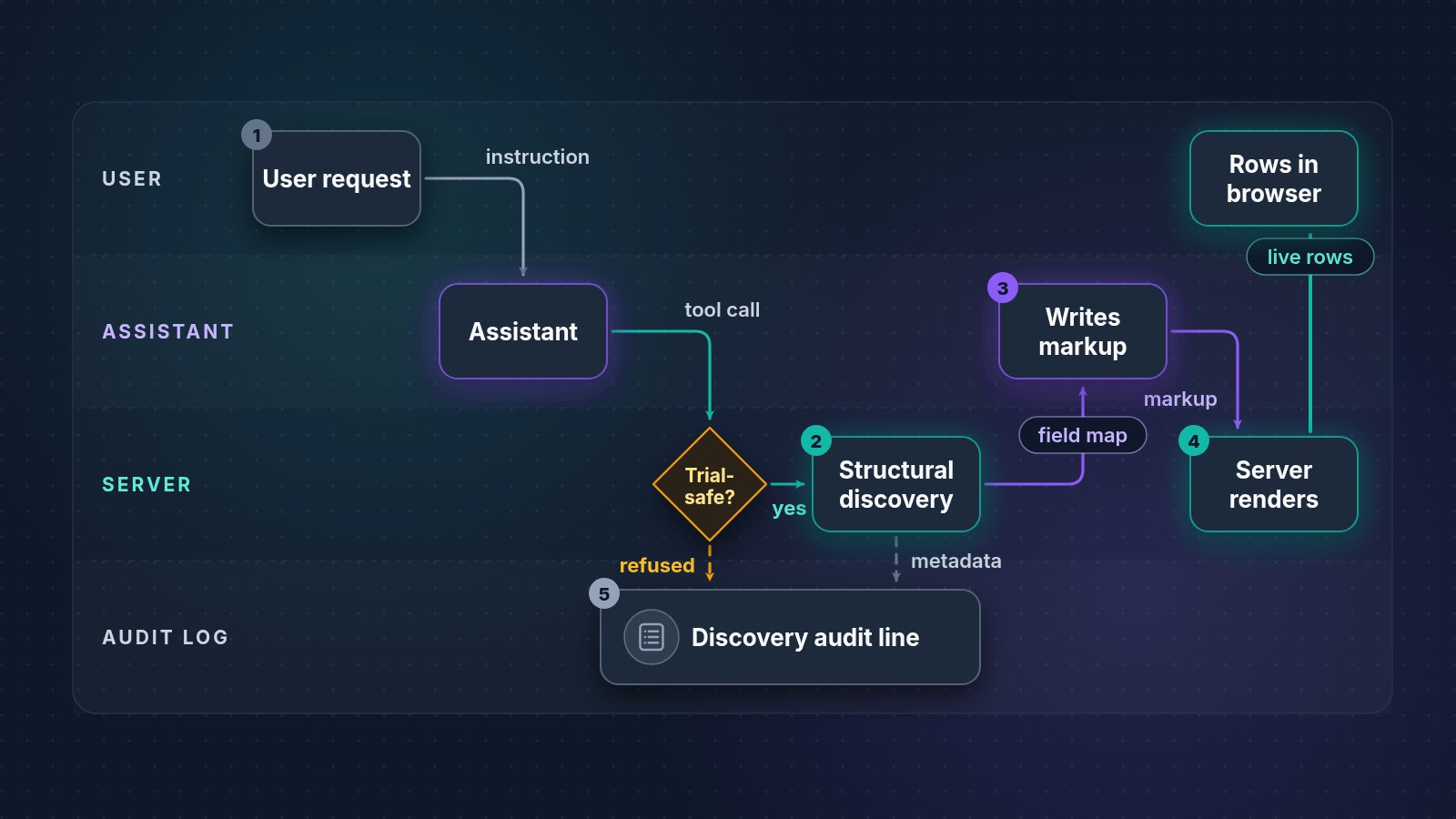
A sanitized request trace separates structural discovery, markup generation, server rendering, and the metadata logged by built-in data-access tools.
Everett McCoy · Oct 2, 2026
The safest path was incremental: preview every transformation, scope the first writes to one tenant, reuse lookup data, and keep invoice display numbers separate from storage identities.
Everett McCoy · Oct 2, 2026
The questions that should not wait until month three — hosting isolation, AI data paths, exit, pricing, integrations, security defaults, and roadmap queueing — with WebEdify's evidence-backed answers linked to canonical site pages.
Everett McCoy · Oct 2, 2026
Try a different search or check back soon.