Melt the Ceiling.
Your app. Your environment.
WebEdify is an AI-native application platform, delivered as managed hosting. Every client runs in a dedicated environment — never a shared tenant pool. Start this morning, ship this afternoon, and scale to enterprise without ever changing platforms.
## default

### Steps
**read** patients from default
- order: name asc

**join** appointments from default
- on: patient_id
<@relay path="patients" rename="list" />

<@table source="list" columns="name,dob,appointments" />
This is a template, not a build
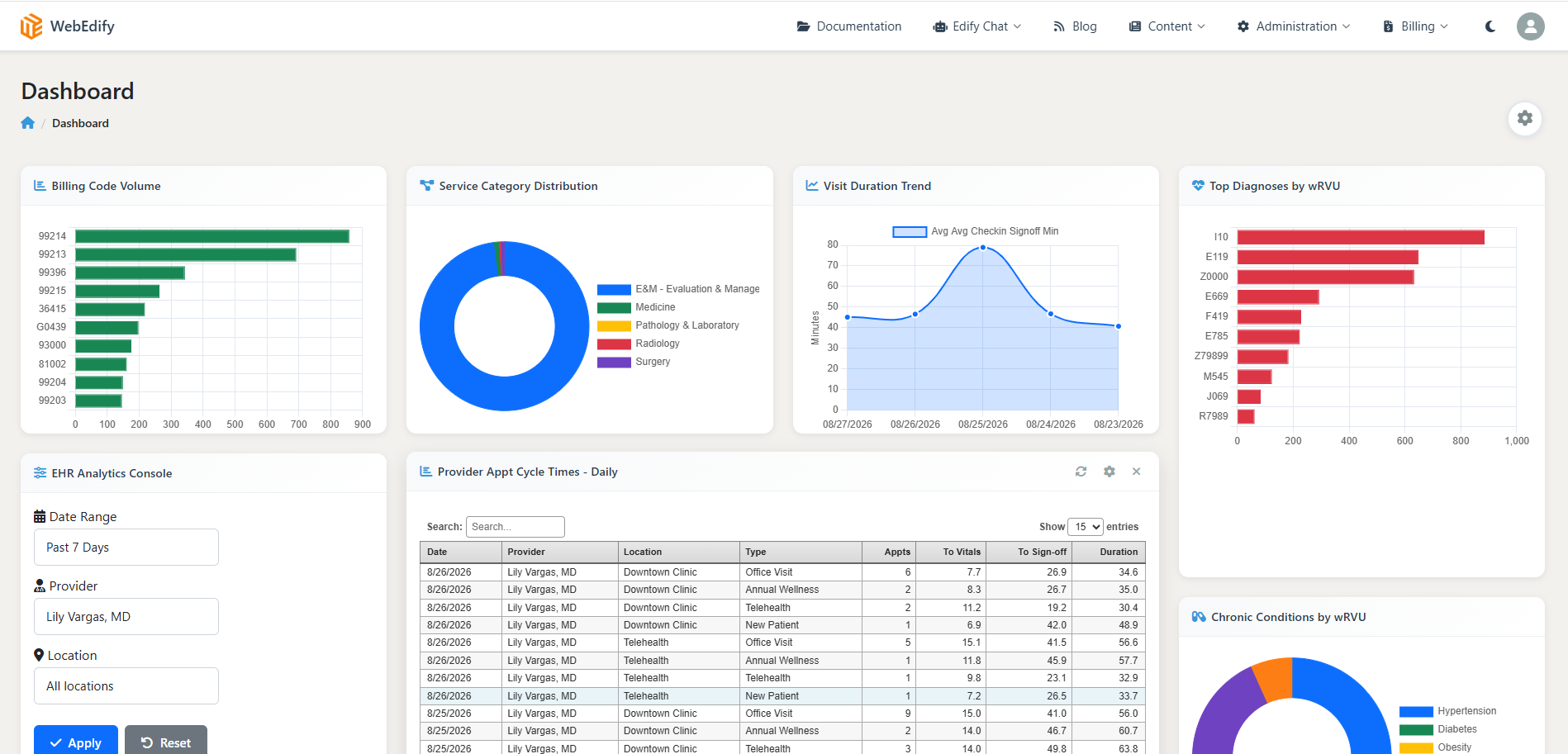
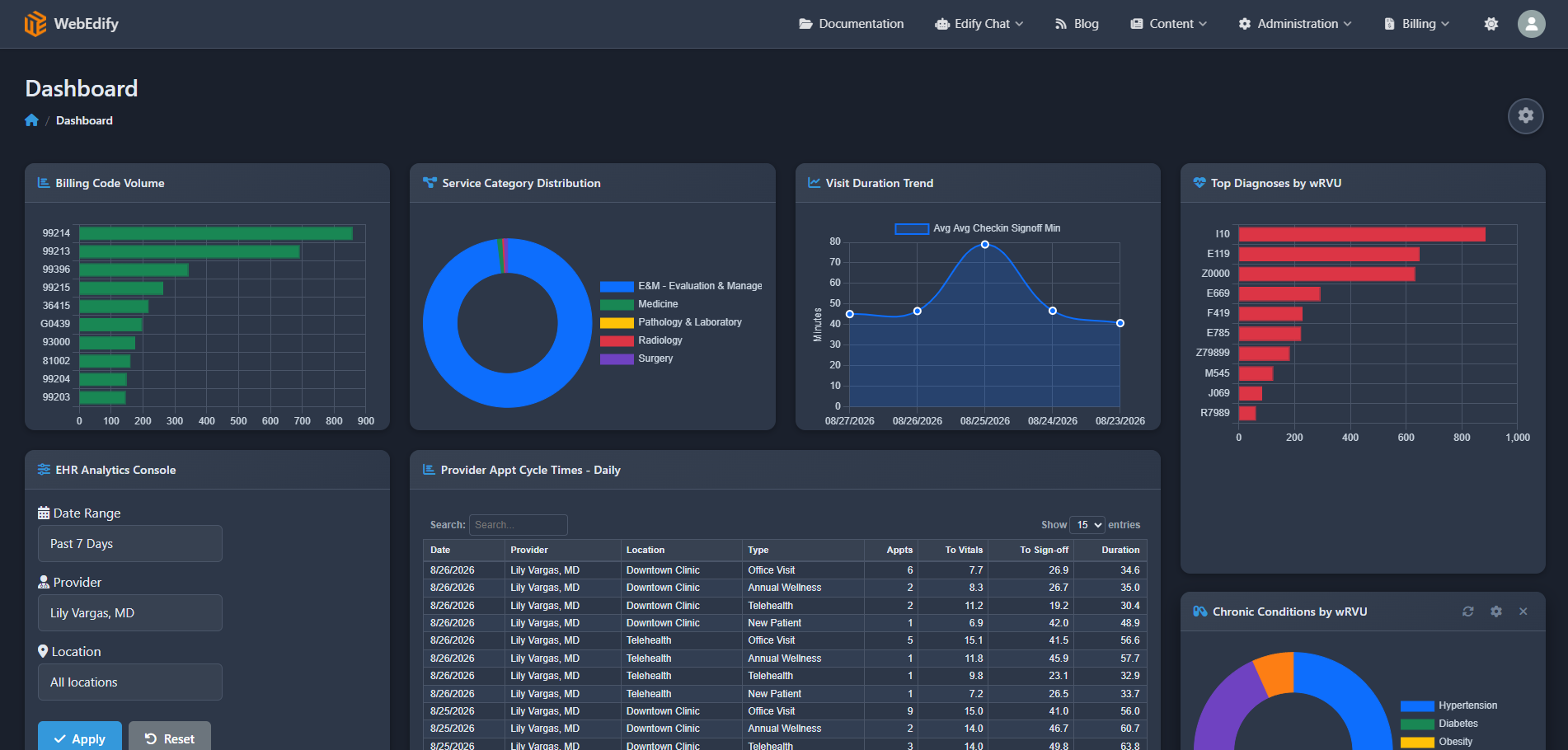
A single <@dashboard> tag renders the whole grid: widgets that load
independently, drag-and-drop arrangement, layouts saved per person, and a filter console
that drives every widget beside it from one set of controls. The charts and the table are
tags as well — nothing on this screen was assembled from a JavaScript library.
Then the person using it rearranges it to suit their own job, and it is still that way at their next login.
Four vendors, one report, and nobody who can change it
Most organizations we meet are running a CRM, a separate system for the work itself, a content platform for the public site, and a spreadsheet holding the part neither of them covers. On top of all four sits a reporting tool, bought separately, that answers last quarter's questions. When something needs to change, the answer is a ticket, a vendor roadmap, or a consultant.
Here it is one system in one environment: the record, the transaction, the document, the public page, and the dashboard that reports on all of them. One team, one login, one place a change actually happens. And because the environment is yours alone, something your business needs is days of work rather than a place in somebody's release queue.
And it costs less than the reporting layer alone
Analytics starts at $1,250 a month — below the floor of embedded analytics tools that stop at chart rendering — with the whole application platform included underneath it.
Managed hosting starts at $300. The ranges are published, along with exactly what moves you within them.
See the numbersAnd your technical team can check the work
Three answers that usually take a procurement cycle to get out of a platform vendor. Here they are up front.
A dedicated environment
Your application does not share infrastructure, configuration, or release timing with anyone else. What you need gets built for you — not queued behind what is safe for every other tenant. Isolation is the architecture, not a premium add-on.
AI that never sees your data
By default the assistant receives only structure — field names, hierarchy, record counts. Never values. It authors markup, the server executes it, and results travel straight to the user's browser. Sharing actual values requires an explicit, visible decision.
No ceiling to hit
Every low-code tool demos well and hits a wall. Underneath WebEdify is the full .NET platform. When a requirement outgrows configuration you drop into C# with real tooling — not a formula language, and not a migration to a different product.
Running in production
Not pilots or proofs of concept — systems people depend on to do their jobs.
MedHelp
Provider dashboards and EHR analytics: provider performance and patient volume, appointment and diagnosis reporting, and a filter console that drives an entire grid of widgets from a single set of controls. Complex joins, role-scoped views, and an AI layer that renders a clinician's data without ever receiving it.
PAG
Benefits administration including invoicing and the data migration workflows that move years of records off legacy systems — the unglamorous, high-consequence work where a platform either holds up under real data or does not.
Alongside them sits a MACRIM managed client book going back years, including Finding Solutions Counseling Centers, ACGI, and FSA, now moving onto the platform — supported by the same operations team that runs 50+ customer networks and systems today. This is not a first attempt at keeping business-critical software online.
Bring us the requirement that broke your last platform
Internal tools, client portals, data-driven products, or an application that has outgrown where it lives now. The useful conversation starts with the thing you were told could not be done.